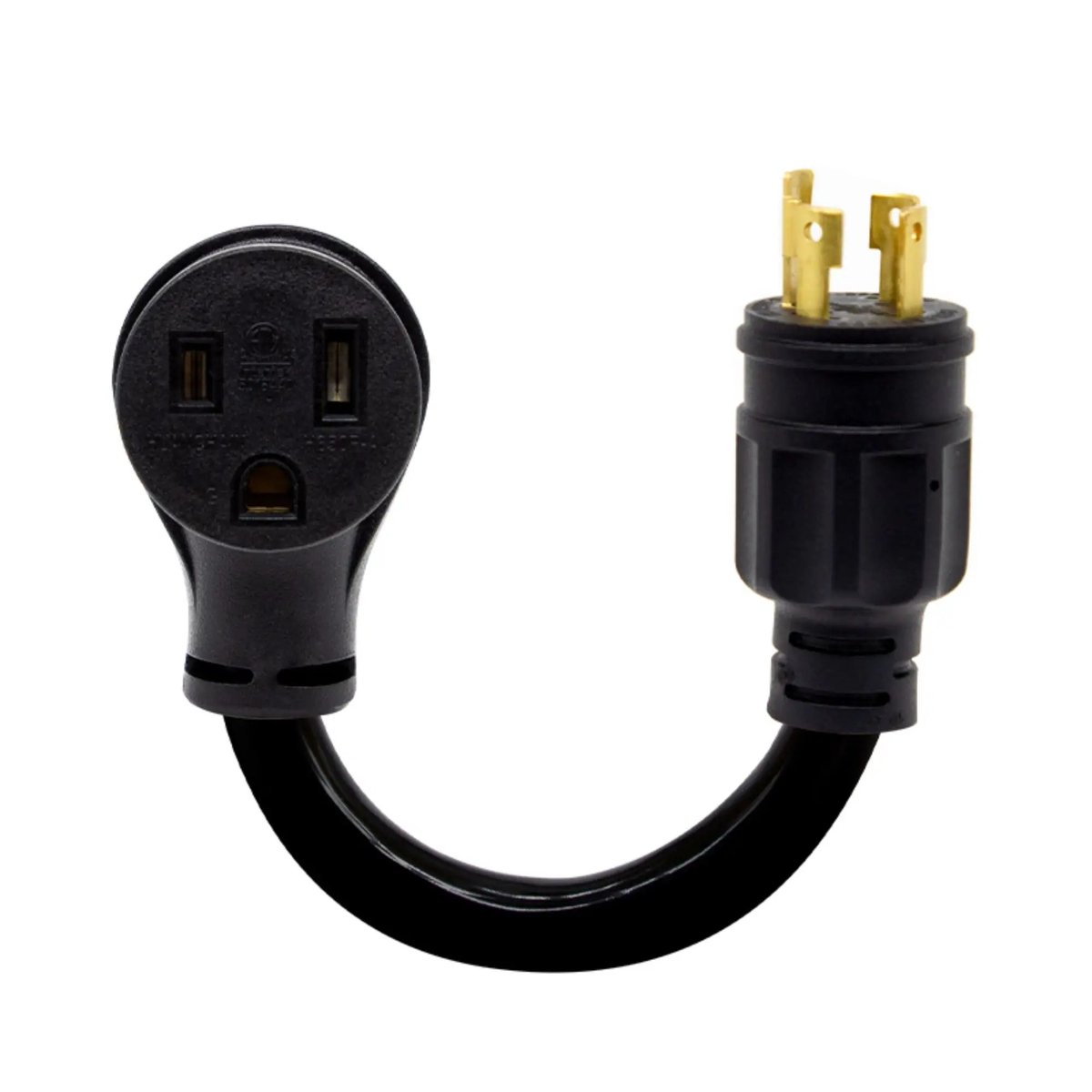
When the lights go out, your portable generator becomes your home's unsung hero. But a generator is only as good as its connection, and that's where choosing the right 30 Amp generator power cable becomes absolutely critical. This isn't just about buying a cord; it's about ensuring safety, maximizing performance, and getting reliable power when you need it most. Skip the guesswork, and let’s plug into the details that matter.
Think of your generator cord as the lifeline for your essential appliances. A poorly chosen or inferior cable can lead to voltage drops, overheating, damaged equipment, or even dangerous electrical hazards. We're here to equip you with the knowledge to make an informed, confident decision, turning a complex technical choice into a simple, smart one.
At a Glance: Your Quick Cord Checklist
Here’s what you need to know, fast, before diving into the details:
- Wire Gauge: Always start with 10 AWG (American Wire Gauge) copper wire for 30 amps. Go thicker (8 AWG) for cords over 100 feet to combat voltage drop.
- Connector Type: Match your generator's receptacle: L5-30 for 120V, 3-prong, or L14-30 for 120/240V, 4-prong. The "L" means "locking."
- Length: Factor in generator placement, but beware of voltage drop on longer runs. Shorter is generally better if feasible.
- Jacket Material: Look for heavy-duty, weather-resistant options like SJTW, STW, SJOW, or SOOW that can handle harsh conditions.
- Safety Certifications: Always verify ETL listing or other recognized safety standards to ensure rigorous testing.
- Home Connection: If backing up your home, insist on a Power Inlet Box (PIB) and a Manual Transfer Switch (MTS) or Interlock Kit. Never use a "suicide cord."
Why Your 30 Amp Generator Power Cable is a Big Deal
A 30 Amp generator cord isn't just a piece of wire; it's the high-capacity conduit that safely delivers power from your generator to its electrical load. Whether you're powering an RV at a remote campsite, keeping your essential home appliances humming during an outage, or running tools on a job site, this cable is the crucial link.
The "30 amp" rating signifies the maximum sustained electrical current the cord can safely handle without overheating. For a standard 120-volt system, a 30-amp cord can comfortably carry around 3,600 watts of power. If your generator provides 120/240-volt split-phase service—common for home backup—a 30-amp cord can deliver approximately 7,200 to 7,500 watts by distributing the load across two 120-volt lines, a neutral, and a ground wire. Understanding this foundational capacity is your first step toward everything about 30 amp power cables.
Deconstructing the Cord: Key Factors for Choosing Wisely
Selecting the right cable involves more than just picking a length. You need to consider its internal makeup, external resilience, and how it interfaces with your specific power setup. Let’s break down the core components.
1. The Right Guts: Wire Gauge (AWG)
The wire gauge refers to the thickness of the individual copper conductors inside the cable. This is paramount for safety and efficiency.
- The Minimum Standard: For any 30-amp circuit, a 10 AWG (American Wire Gauge) copper wire is the bare minimum standard. This gauge provides excellent conductivity, efficiently transferring power and minimizing resistance that could lead to overheating.
- Going Thicker for Longer Runs: Electrical resistance increases with cord length. For generator cords exceeding 100 feet, stepping up to an 8 AWG wire is highly recommended. Why? To prevent a phenomenon called "voltage drop."
Understanding Voltage Drop
Voltage drop occurs when the electrical pressure (voltage) decreases as it travels through a wire, especially over long distances or through thinner wires. Imagine trying to drink water through a very long, thin straw; you get less pressure at the other end.
Why it matters: Excessive voltage drop can starve your appliances of the power they need, causing motors to run harder and hotter, reducing their lifespan, and impacting overall efficiency. Lights might dim, and sensitive electronics could even be damaged. You can learn more about understanding voltage drop to fully grasp its implications. Choosing a thicker gauge like 8 AWG for longer cords acts like a wider straw, maintaining consistent power delivery.
2. The Protective Shell: Jacket Material
The outer jacket of your generator cord is its first line of defense against the elements and everyday wear and tear. You need something tough.
Look for heavy-duty jacket materials designed to withstand outdoor conditions. Common and reliable options include:
- SJTW, STW: These indicate outdoor-rated cords that are generally weather, oil, and abrasion resistant. "S" means "Service," "J" for "Junior Service" (300V rated), "T" for "Thermoplastic," and "W" for "Weather resistant." STW is typically heavier duty (600V rated).
- SJOW, SOOW: These offer even greater flexibility and resistance to oil, water, and outdoor elements. "O" stands for "Oil resistant," and the double "OO" means "Oil resistant outer jacket and insulation." These are often preferred for industrial or heavy-duty outdoor use due to their superior durability.
A good jacket will be heat-resistant, flame-retardant, and water-resistant (some even carry IP65 waterproof ratings). Quality cords are designed to operate safely in extreme temperatures, typically from -40°F to 221°F, making them suitable for year-round outdoor use. This resilience ensures your cord won't crack, stiffen, or degrade when you need it most.
3. Power Capability: Voltage and Wattage
Most quality 30 Amp generator cords are built for versatility, supporting dual voltage systems and a significant power output.
- Dual Voltage (125V/250V): This common rating means the cord can handle both standard 120-volt circuits and the higher 240-volt circuits required for larger appliances or split-phase home backup.
- Maximum Power Output: These cords are typically rated to handle up to 7,500 watts. This capacity aligns perfectly with many mid-to-large portable generators, ensuring they can transfer the full output of your machine without strain.
Always match the cord's voltage and wattage rating to your generator's output and the demands of the appliances you intend to power.
4. The Connection Point: Connector Type (NEMA Standards)
This is perhaps the most critical component to get right, as it dictates whether your cord will even plug into your generator and your desired load. Electrical connectors are standardized by NEMA (National Electrical Manufacturers Association). The "L" in NEMA designations signifies a locking mechanism, which is a major safety advantage.
Here are the two primary 30-amp generator connector types you'll encounter:
- NEMA L5-30:
- Configuration: 3-prong, with a locking mechanism.
- Purpose: Designed for 120-volt, single-phase power. It has one hot wire, one neutral, and one ground.
- Common Use: Often found on smaller portable generators, RVs, travel trailers, and some marine applications where only 120V power is needed.
- Wattage: Handles up to 3,600 watts (30 amps x 120 volts).
- NEMA L14-30 (typically P for plug, R for receptacle):
- Configuration: 4-prong, with a locking mechanism.
- Purpose: Standard for 120/240-volt split-phase service. It has two hot legs (each 120V to neutral, 240V between them), one neutral, and one ground wire.
- Common Use: Essential for larger portable generators designed for home backup, allowing you to power both 120V and 240V appliances (like well pumps or central AC units, though rarely a whole central AC).
- Wattage: Handles up to 7,500 watts (30 amps x 240 volts, considering the split-phase nature).
The Locking Advantage: The "L" (for Locking) in NEMA L5-30 and L14-30 is incredibly important. Twist-lock plugs ensure a secure connection that won't accidentally pull out or disconnect during generator operation, especially in adverse weather conditions or if the cord is tugged. This is a vital safety and reliability feature. For a deeper dive into different NEMA connector types, check out our comprehensive guide.
5. Reaching the Distance: Cord Length
Generator cords come in various lengths, typically from 20 to 50 feet.
- Flexibility vs. Efficiency: Longer cords offer greater flexibility, allowing you to position your generator further away from your home or campsite, which is crucial for noise reduction and carbon monoxide safety (more on that later).
- The Voltage Drop Trade-off: As discussed, the longer the cord, the greater the potential for voltage drop. If you absolutely need a longer cord (e.g., 75 or 100 feet), it becomes even more imperative to choose a thicker gauge wire (8 AWG) to mitigate this issue. For runs over 100 feet, serious consideration should be given to generator placement or a more permanent wiring solution.
Always measure the distance you anticipate needing, then add a little extra for slack, but don't overdo it. The shortest practical length that safely connects your generator is often the best choice.
6. Built-in Safeguards: Safety Features
Beyond the core construction, several design elements contribute to the overall safety and durability of your generator cord.
- Twist-Lock Plugs: We've mentioned these, but it bears repeating: the locking mechanism prevents accidental disconnections, which could cause a sudden power interruption or even arc faults.
- Strain Relief Structures: At the points where the cable meets the connectors, look for robust strain relief. These reinforced areas protect the cord and the internal wiring from damage due to pulling, bending, or kinking, which are common causes of cord failure.
- Heat-Resistant Materials: Connectors and internal insulation should be made of materials that can withstand the heat generated during prolonged high-current operation.
7. The Stamp of Approval: Certifications
Never overlook this. Always ensure your generator cord is ETL Listed or meets other recognized safety standards (like UL, CSA).
- What it means: These certifications indicate that the product has been independently tested and found to comply with rigorous industry safety guidelines. This testing covers everything from the cord's ability to handle rated current without overheating to its fire resistance and structural integrity.
- Your Guarantee: An uncertified cord is a gamble with your safety and equipment. Always look for the certification mark directly on the cord or its packaging. It’s a non-negotiable aspect of generator safety practices.
Connecting Your Generator to Your Home: A Crucial Safety Talk
This section is perhaps the most vital aspect of using a generator, especially for home backup. Connecting a generator directly to your home's electrical system carries significant risks if not done correctly.
The ONLY Safe and Legal Way: Power Inlet Box (PIB) + Transfer Switch/Interlock
To safely and legally connect a generator to your home's electrical panel, you must use a system designed to prevent "backfeed."
- Power Inlet Box (PIB): This is a weatherproof box mounted on the exterior of your home. It contains a single, dedicated receptacle (usually an L14-30) that matches your generator cord's plug. The PIB is hardwired to your main electrical panel by a qualified electrician. This provides a safe, designated point for your generator to feed power into your home. Explore the benefits of a Power Inlet Box for more insights.
- Manual Transfer Switch (MTS) or Mechanical Interlock Kit: Inside your main electrical panel, one of these devices is absolutely essential.
- Manual Transfer Switch (MTS): This dedicated panel allows you to safely switch specific circuits in your home from utility power to generator power. It's designed so that the main utility breaker and the generator breaker cannot be "on" simultaneously. For guidance, refer to our article on manual transfer switch installation.
- Mechanical Interlock Kit: This clever device physically prevents the main utility breaker and the generator breaker in your main panel from being on at the same time. It's a cost-effective and highly effective way to achieve backfeed prevention.
THE GRAVE WARNING: NEVER USE A "SUICIDE CORD"
This cannot be stressed enough: NEVER, EVER use a "suicide cord." A suicide cord is a generator cord with male plugs on both ends. The intention is often to plug one end into the generator and the other into a standard wall outlet in your home, attempting to "backfeed" power directly into your house.
Why this is lethally dangerous:
- Electrocution Risk for Utility Workers: When power flows back into the utility lines, it can energize lines thought to be dead, electrocuting utility workers trying to restore power. This is why it’s also known as a "widow maker."
- Damage to Appliances: Your home's wiring and appliances are not designed for this type of unregulated power input, risking severe damage.
- Fire Hazard: Overloading circuits or improper connections can easily lead to electrical fires.
- Illegal: Using a suicide cord is illegal in every jurisdiction and carries severe penalties.
Using an approved Power Inlet Box combined with a transfer switch or interlock kit is the only responsible and legal method to connect your generator to your home. Do not compromise on this.
Beyond the Basics: Accessories & Usage Tips
Once you've chosen your ideal 30 Amp generator cord, a few extra considerations can enhance your experience and prolong the cord's life.
Handy Accessories
- Storage Bags/Cord Organizers: Many quality cords come with a storage bag or organizer strap. These are incredibly useful for preventing tangles, keeping the cord neatly coiled, and making transport and storage much easier. A tangled cord is a damaged cord waiting to happen.
- Weatherproof Covers/Boots: For connections that might be exposed to rain or dampness (though a proper PIB should offer protection), some accessories provide additional shielding around the plug connection points.
Usage Best Practices
- Proper Placement: Always place your generator outdoors, in a well-ventilated area, away from windows, doors, and vents to prevent carbon monoxide buildup. Even the best cord won't protect against this silent killer.
- Uncoil Completely: Always fully uncoil your generator cord before use. Coiling can trap heat, which increases resistance and can damage the cord or lead to overheating.
- Inspect Regularly: Before each use, visually inspect the entire cord for any cuts, frays, exposed wires, or damaged plugs/receptacles. Never use a damaged cord.
- Avoid Overloading: Ensure the total wattage of the appliances you're running does not exceed the generator's output or the cord's capacity.
- Protect from Traffic: Position the cord where it won't be a tripping hazard or driven over by vehicles. Use cord protectors if necessary in high-traffic areas.
- Storage: When not in use, clean the cord, coil it properly, and store it in a dry, cool place, protected from direct sunlight and extreme temperatures.
Common Questions & Misconceptions
Let's clear up some common doubts about generator cords.
Q: Can I use a regular extension cord for my 30 amp generator?
A: Absolutely not. A standard household extension cord is not rated for 30 amps and will quickly overheat, melt, and become a severe fire hazard. Always use a dedicated, heavy-duty 30 amp generator cord.
Q: What's the difference between an L5-30 and an L14-30?
A: The NEMA L5-30 is a 3-prong, 120-volt locking connector, primarily for single-phase 30 amp power (e.g., RVs). The NEMA L14-30 is a 4-prong, 120/240-volt locking connector for split-phase 30 amp power, typically used for home backup. Ensure your cord matches your generator's receptacle.
Q: Is a longer cord always better for flexibility?
A: While longer cords offer more flexibility in generator placement, they also increase the risk of voltage drop. If you must use a longer cord (over 50 feet), ensure it's a heavier gauge (like 8 AWG) to compensate. Shorter, appropriate length cords are generally more efficient.
Q: Why do I need a transfer switch or interlock kit? Can't I just use a regular outlet?
A: Using a regular outlet via a "suicide cord" is incredibly dangerous and illegal. A transfer switch or interlock kit is essential to prevent "backfeed"—power flowing back into the utility grid, which can kill utility workers. It also protects your home's electrical system and appliances.
Q: My generator is only 3,000 watts. Do I still need a 30 amp cord?
A: If your generator has a 30 amp receptacle (e.g., L5-30), then yes, you need a 30 amp cord designed to plug into it. Even if your generator's total output is less than 3,600W, the receptacle is rated for 30 amps, and the cord must match that rating for safe operation.
Your Power, Your Peace of Mind
Choosing the right 30 Amp generator power cable is a decision that impacts not just convenience, but ultimately, safety and the longevity of your valuable equipment. By focusing on wire gauge, jacket durability, correct connector type, appropriate length, and crucial safety certifications, you're not just buying a cable—you're investing in reliability and peace of mind.
Remember, the goal is always to deliver stable, efficient power to your home or devices without risking electrical hazards. Take the time to match your cable to your specific needs, always prioritize safety measures like proper home connection methods, and you'll be well-prepared for any power challenge that comes your way. Stay safe, stay powered.
Untuk pemahaman lebih lengkap, baca panduan utama kami: Everything about 30 amp power cables