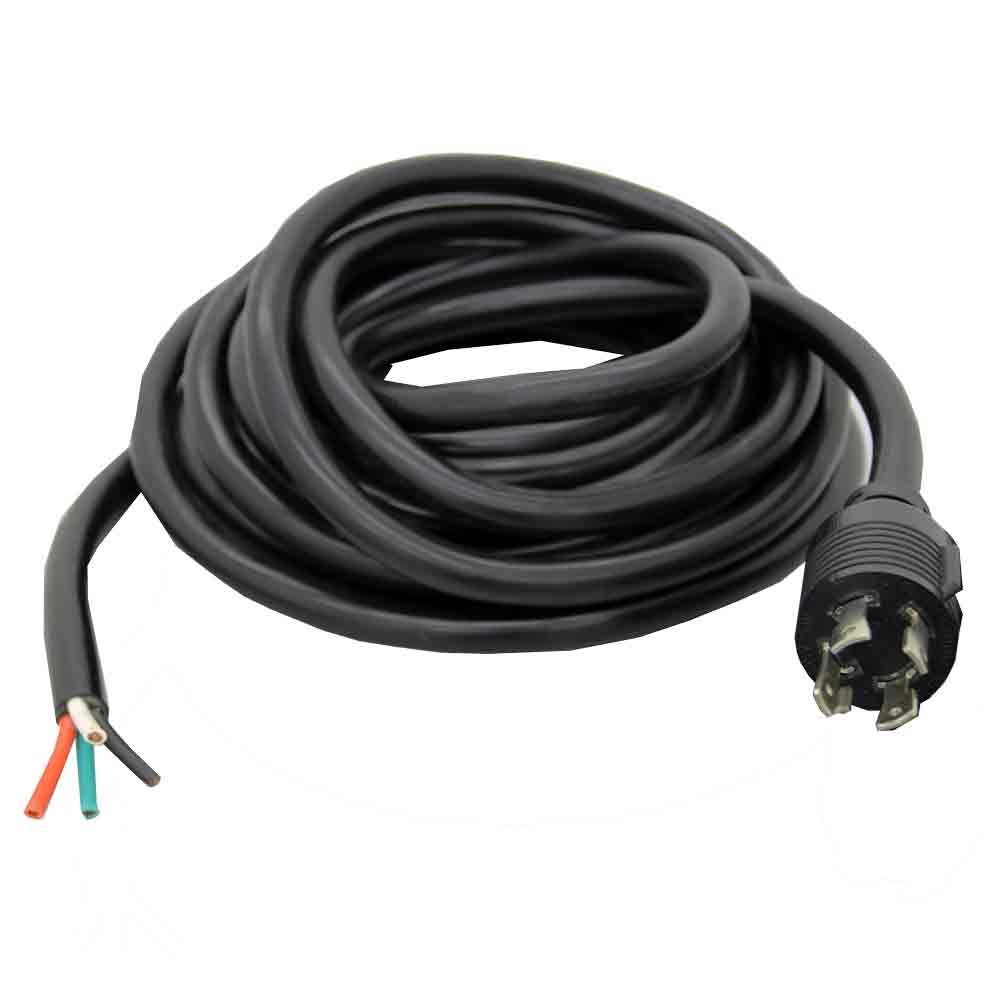
When the lights go out, your generator stands ready to restore comfort and critical functions. But connecting it safely and effectively hinges on one crucial component: the generator cable. Specifically, understanding 30 amp generator cables – their sizing, types, and proper use – isn't just about getting power; it's about protecting your home, your generator, and yourself. Getting this wrong can lead to serious risks, from equipment damage to fire hazards, and even electrocution. Let's illuminate the path to safe and reliable generator power.
At a Glance: Key Takeaways for 30 Amp Generator Cables
- Purpose: 30 amp cables are designed to safely carry a maximum of 30 amperes of electrical current.
- Wattage Capacity: Handles roughly 3,600 watts at 120V, or 7,200-7,500 watts at 120/240V.
- Minimum Gauge: For 30 amps, 10 AWG copper wire is the industry standard and NEC-recommended minimum.
- Distance Matters: Longer runs (over 50 feet) often require a thicker 8 AWG wire to prevent voltage drop.
- Plug Types: Common types are NEMA L5-30 (120V) and L14-30 (120/240V). They must match your generator and inlet box.
- Safety First: Always use a proper power inlet box, transfer switch, or interlock kit to connect to your home and prevent dangerous backfeeding.
- Never Use Suicide Cords: Cords with male ends on both sides are extremely dangerous and illegal.
Decoding the 30-Amp Rating: What It Really Means
The "30 amp" in a generator cable's description isn't just a number; it's a critical safety and performance specification. It defines the maximum sustained electrical current, measured in amperes (A), that the cable is designed to carry without overheating or degrading.
For most residential generators, you'll encounter two common voltage configurations:
- 120-Volt Systems: Here, a 30-amp cord can safely handle approximately 3,600 watts (30 amps x 120 volts). This is typical for smaller generators or dedicated circuits like RV power.
- 120/240-Volt Split-Phase Systems: Many home backup generators provide this dual-voltage output. A 30-amp cord in this setup can manage around 7,200 to 7,500 watts. How? The load is distributed across two separate 120-volt "hot legs," plus a neutral and a ground wire, effectively doubling the power delivery capacity while maintaining the 30-amp limit on each leg. This is the standard for powering a home's essential circuits.
Understanding this wattage capacity helps you match your generator's output to your home's needs and select the correct cable to avoid overloads.
The Heart of the Matter: Wire Gauge and Amperage
At the core of any electrical cable is its wire gauge – the physical thickness of the conductor inside. In North America, this is measured using the American Wire Gauge (AWG) system. It's a bit counter-intuitive: a smaller AWG number indicates a thicker wire. This thicker wire has less electrical resistance, allowing it to carry higher currents more safely and efficiently.
For a 30-amp circuit, the National Electrical Code (NEC) provides clear guidelines. The standard minimum wire size is 10 AWG copper. This gauge is specifically rated to safely handle 30 amps for typical distances without excessive heat buildup or performance issues.
Why is using the correct gauge so important? Imagine trying to drink a thick milkshake through a coffee stirrer. The effort is immense, and you barely get any milkshake. Similarly, if you use a wire that's too thin (e.g., 12 AWG or smaller) for a 30-amp load, you're forcing too much current through an insufficient conductor. This leads to:
- Excessive Heat: The wire heats up dangerously, risking insulation damage, short circuits, and even fire.
- Voltage Drop: Power is lost as heat, meaning the appliances at the end of the cord receive less voltage than they need, potentially damaging motors or electronic components.
- Circuit Breaker Tripping: The safety mechanisms will kick in, frustratingly shutting down your power.
In short, selecting the right gauge isn't just a recommendation; it's a non-negotiable safety requirement.
Beyond Amps: Key Factors Influencing Your Cable Choice
While 30 amps is your starting point, several other critical factors play a role in choosing the perfect 30 amp generator cable for your specific setup.
1. The Amperage Rating (Revisited)
Yes, we've covered it, but it bears repeating: for any 30-amp circuit, 10 AWG copper wire is the absolute minimum size recommended by the NEC. This is the baseline. Never go below this.
2. Distance Matters: The Voltage Drop Dilemma
The longer your generator cable, the more resistance it encounters, and the more power it loses as heat. This phenomenon is called voltage drop. Too much voltage drop means your appliances won't run efficiently, or might not run at all, and it can harm sensitive electronics.
- Up to 50 Feet: For most typical generator setups where the cable run is 50 feet or less, 10 AWG copper wire is generally suitable for a 30-amp circuit.
- Beyond 50 Feet (and up to ~100 feet): As you approach or exceed 50 feet, the risk of significant voltage drop increases. For these longer runs, especially those pushing towards 100 feet, upgrading to 8 AWG copper wire is strongly recommended. This thicker wire reduces resistance, helping to maintain voltage levels and keep the voltage drop under the recommended 3% threshold, ensuring your devices receive adequate power.
Always calculate your cable length accurately. When in doubt, go a size thicker; it's a small investment for peace of mind and optimal performance.
3. Wire Material: Copper Reigns Supreme
When it comes to generator cables, copper wires are the preferred choice. Their advantages are clear:
- High Conductivity: Copper is an excellent conductor of electricity, meaning it offers less resistance and allows more current to flow efficiently.
- Durability: It's strong and resilient, standing up well to the demands of portable power.
While aluminum wire is sometimes used in residential wiring due to its lower cost, it has about 60% the conductivity of copper. If you must use aluminum wire for a 30-amp circuit, you would need to increase the wire size by at least one gauge (e.g., use 8 AWG aluminum where 10 AWG copper would suffice) to compensate for its lower conductivity. However, for portable generator cables, copper is overwhelmingly the standard and safer choice.
Plug Configurations: Making the Right Connection
Beyond the internal wires, the physical plug and receptacle are equally vital. Generator cables typically use NEMA (National Electrical Manufacturers Association) locking-style connectors, designed to prevent accidental disconnection. The key is ensuring your cable's plug precisely matches both your generator's outlet and your home's power inlet box.
Here are the standard 30-amp generator cord plug configurations you'll encounter:
- NEMA L5-30: This is a three-prong connector designed for 120-volt, single-phase power. You'll often find this on smaller portable generators, or for dedicated 120V applications like powering an RV. It features two curved prongs and one straight prong.
- NEMA L14-30: This is a four-prong connector designed for 120/240-volt split-phase service. This is the most common plug type for larger generators intended to back up a home, as it provides both 120V and 240V power simultaneously. It includes two "hot" legs, one neutral, and one ground wire. The prongs are configured as two curved, one straight, and one L-shaped.
Actionable Insight: The physical plug must precisely match the receptacle on your generator and, if connecting to your home, on your home’s power inlet box. Never attempt to modify or force an incompatible plug. Doing so is incredibly dangerous and can damage equipment or cause serious injury. If the plugs don't match, you need an adapter (ensure it's appropriately rated) or the correct cable.
Safety Standards: Connecting Your Generator to Your Home
Connecting a generator directly to your home's electrical system requires adherence to strict safety standards, primarily dictated by the National Electrical Code (NEC). These standards are designed to prevent dangerous situations, particularly backfeeding.
The Dangers of Backfeeding
Backfeeding occurs when your generator sends power back into the utility grid. This is an extremely dangerous scenario for several reasons:
- Electrocution Risk for Lineworkers: Utility workers believe the lines are dead during an outage. If your generator backfeeds, those lines become energized, putting them at severe risk of electrocution.
- Damage to Generator & Appliances: When utility power returns, the clash of your generator's power with the grid's power can damage your generator, home wiring, and sensitive appliances.
Essential Safety Mechanisms
To prevent backfeeding and ensure safe operation, proper installation is non-negotiable:
- Power Inlet Box (PIB): This is the safest way to connect your generator to your home. A PIB is a weatherproof box mounted on the exterior of your home, with a NEMA-compatible receptacle (e.g., L14-30). It's wired directly to a dedicated breaker inside your main electrical panel. Your generator cable plugs into this box.
- Manual Transfer Switch (MTS) or Interlock Kit: Inside your main electrical panel, you must have a mechanism to isolate your home from the utility grid before engaging generator power.
- Manual Transfer Switch (MTS): This is a separate panel or sub-panel that allows you to manually switch between utility power and generator power. It's designed to ensure that only one power source can be connected to your home's circuits at a time.
- Mechanical Interlock Kit: This clever device physically prevents the main utility breaker and the dedicated generator breaker in your main panel from being "on" simultaneously. It's a cost-effective and NEC-compliant solution for many homes.
Actionable Insight: Never, Ever Use "Suicide Cords." These are homemade or illicit cords with male plugs on both ends (designed to plug into your generator and then into a wall outlet in your home). This practice is extremely dangerous, illegal, and bypasses all necessary safety mechanisms. It guarantees backfeeding, risking lives and property. If someone offers you a suicide cord, politely decline and educate them on the risks.
Beyond the Basics: Wiring and Cord Best Practices
Even with the right gauge and plug, a generator cable requires careful consideration for its construction and handling.
Insulation and Jacket Ratings
Generator cables operate outdoors, often in less-than-ideal conditions. Look for cables with robust insulation and jacket ratings designed for such environments. Common ratings include:
- SJOW or SOOW: These indicate a heavy-duty service cord with an oil-resistant thermoplastic or thermoset jacket.
- S: Service cord (rated for 600 volts)
- J: Junior service (rated for 300 volts) - Note: For 30A generator, typically S is preferred.
- OO: Oil resistant insulation and outer jacket
- W: Weather and water resistant
These ratings ensure the cable can withstand exposure to sun, rain, oil, and abrasion, extending its lifespan and maintaining safety.
Proper Grounding
Your generator system, including the cable, must maintain proper grounding. This provides a safe path for fault currents to return to the ground, preventing electrical shocks in case of a fault. Generator plugs (especially the L14-30) incorporate a ground prong for this purpose. Ensure all connections, including the generator itself, are correctly grounded according to manufacturer instructions and local codes.
Avoid Splicing and DIY Repairs
A generator cable is subjected to significant electrical loads. Any weak points can become hot spots.
- Avoid Splicing: Never splice a generator cable to extend its length or repair damage. Spliced connections are inherently less reliable and can lead to resistance, heat buildup, and failure.
- Use Appropriate Connectors: If you need to make connections (e.g., to a Power Inlet Box), use high-quality, appropriately rated connectors and terminals.
- Tighten All Terminals: Loose connections are a common cause of electrical problems. Always ensure all screw terminals are tightened securely to prevent arcing and heat.
Clear Labeling and Organization
If you have multiple cords or similar-looking cables, clearly mark your generator cables with their amperage rating and voltage (e.g., "30 Amp, 120/240V Generator Cable"). This prevents confusion and accidentally using an under-rated cord for a demanding load. Proper coiling and storage also prolong cable life.
Common Questions About 30 Amp Generator Cables
Can I use a 12 AWG extension cord for my 30-amp generator?
Absolutely not. A 12 AWG wire is rated for a maximum of 20 amps. Using it for a 30-amp load will cause severe overheating, voltage drop, and pose a significant fire hazard. Always use at least 10 AWG copper for 30-amp circuits, and 8 AWG for longer runs.
What if my generator's outlet is different from my inlet box?
If your generator's NEMA outlet (e.g., L5-30) doesn't match your home's power inlet box (e.g., L14-30), you might need an adapter. However, be extremely cautious. The adapter must be specifically rated for the amperage and voltage, and you must understand that if you're adapting from a 120/240V L14-30 generator to a 120V L5-30 inlet, you're only utilizing a portion of the generator's potential. Never adapt to use a cord with a lower amp rating than the circuit it's intended to power.
Is a 50-foot 10 AWG cable always safe for 30 amps?
While 10 AWG is generally rated for 30 amps, for runs approaching 50 feet or where your load will consistently draw close to 30 amps, moving up to 8 AWG provides an extra margin of safety and efficiency by minimizing voltage drop. It's often better to slightly over-size than under-size.
How do I know if my generator cable is getting too hot?
If you can feel the cable getting warm to the touch (beyond ambient temperature) while the generator is running under load, it's a strong indicator of an issue. This could mean the wire gauge is too small, the cable is too long, or there's a faulty connection. Immediately reduce the load or shut down the generator and investigate the cause.
Can I bury a generator cable?
No, standard portable generator cables are not designed for direct burial. If you need a permanent underground connection, it requires specialized, direct-burial rated conductors installed in conduit, following strict NEC guidelines. This is a complex electrical installation, usually requiring a licensed electrician.
Powering Up Safely: Your Next Steps
Understanding 30 amp generator cables means more than just knowing a number; it means embracing safety, efficiency, and preparedness. You've learned about the critical role of wire gauge, the impact of distance, and the absolute necessity of proper plug configurations and safety interlocks when connecting to your home.
Before the next storm hits, take the time to:
- Assess Your Needs: Determine your generator's wattage output and the amperage required by your essential home circuits.
- Inspect Your Equipment: Check your existing generator cables for any signs of damage, fraying, or wear.
- Verify Compatibility: Ensure your generator's outlet, your cable's plug, and your home's power inlet box (if applicable) are all perfectly matched.
- Confirm Safety Installations: If connecting to your home, verify you have an NEC-compliant Power Inlet Box and a Manual Transfer Switch or Interlock Kit in place.
- Invest in Quality: Purchase generator cables from reputable manufacturers, ensuring they meet AWG and jacket ratings suitable for your usage.
By following these guidelines, you're not just buying a cable; you're investing in reliable power and, most importantly, the safety of your home and loved ones. Stay powered, stay safe.